
Microservices, A Revolution in the Architecture of Applications

Imagine yourself at the heart of developing a critical enterprise application. You face the constant challenge of making rapid, frequent, and reliable changes to keep pace in an ever-evolving business environment. The solution you seek must not only be agile but also capable of adapting to the changing demands of the business. This is where microservices come into play, revolutionizing application architecture.
Unraveling Microservices
Microservices, or microservices architecture, is an architectural style that redefines how we structure and develop applications. Its rapid growth in the software industry is attributed to practical advantages addressing challenges in modern enterprise development.
In this article, we will explore both the theory and practical steps to incorporate them into critical business application development.
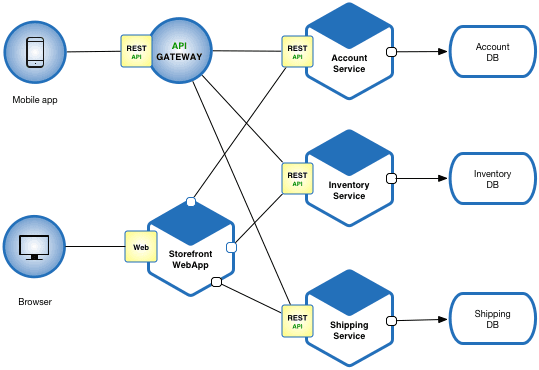
Tangible Benefits
Among the stream of benefits offered by microservices, key aspects stand out for success in development:
- Scalability and Flexibility: They also enable organizations to scale and adapt their applications more efficiently, crucial in a constantly changing business environment.
- Independent Deployment: The ability to deploy services independently facilitates continuous implementation and rapid delivery of new features and bug fixes.
- Improved Resilience: Microservices can be designed to be fault-tolerant, enhancing application reliability in a world where availability is crucial.
- Facilitates Collaboration: Organizing into small, cross-functional teams fosters agile collaboration and decision-making.
- Cloud Adaptation: Microservices are ideal for cloud applications, as they can be efficiently deployed and scaled in cloud environments.
- Specific Technologies and Tools: The development community has created a range of tools and technologies specific to working with microservices, simplifying their adoption.
Microservices architecture enables an organization to deliver large and complex applications quickly, frequently, reliably, and sustainably—an essential aspect for competitiveness and success in today’s world.
Steps for Developing Applications with Microservices
Developing a microservices-based application involves a specific approach that differs from traditional monolithic architectures.
1. Discover System Operations
The first step is to identify and define the operations that the system must perform—specific actions that can be invoked or executed by the application. For example, in an e-commerce application, operations might include creating a new customer, generating a purchase order, canceling an order, or retrieving a customer’s order history.
2 Define Subdomains
Identify and delineate specific areas of functionality, with each subdomain representing a clearly defined part of business functionality. These subdomains are often managed by small, autonomous teams, such as “Customer Management,” “Order Management,” “Inventory,” and “Billing.”
3 Design Services and Their Collaborations
The third step involves designing services and defining how they will collaborate. Previously defined subdomains are grouped to form independent services, and collaboration patterns between these services are established.
Various collaboration patterns, such as Saga, API Composition, or CQRS (Command Query Responsibility Segregation), can be employed at this stage.
4 Evaluate Microservices Architecture
Once designed, the architecture should be evaluated to identify potential architectural issues or challenges. This evaluation is crucial to ensure that the architecture meets application requirements and is effective in practice.
Common architectural issues may include:
- Lack of team autonomy: Constant collaboration among teams on a single service may limit team autonomy.
- Block-level changes: Strong coupling between services may lead to difficulties in independent development.
- Low availability and high latency: Operations requiring multiple network calls between services may result in low availability and high latency.
When to Use and When to Avoid Microservices in Software Architecture
Microservices are effective in many situations but are not the right solution for every case. Here are some guidelines on when to use and avoid microservices:
When to use microservices:

Scalability and Agility
Use microservices when specific parts of an application need to scale and deploy independently and agilely, responding rapidly to changing business demands.
Small, Autonomous Teams
Microservices work well with small, autonomous teams that can take responsibility for a specific service, developing and maintaining it independently.
Technological Diversity
If your application needs to use different technologies or frameworks for different parts, microservices accommodate this technological diversity by encapsulating it in separate services.
Ease of Continuous Deployment
Microservices are ideal for applications benefiting from continuous deployment, allowing rapid and frequent implementation of changes.
Individual Scalability
When different parts of your application require individual scalability, microservices enable adding or reducing resources as needed for each service.
When not to use microservices:

Simple Applications
For small or simple applications, adopting microservices may be unnecessary and add unnecessary complexity.
Limited Resources
If resources, such as technical staff or management capacity, are limited, managing many microservices can be overwhelming
Inexperienced Team
If your team lacks experience in designing and maintaining microservices architectures, adopting them without proper learning may not be advisable.
High Initial Coupling
If parts of your application are highly coupled at the project’s outset, it may be more efficient to start with a monolithic architecture and consider migration to microservices as the application grows and evolves.
Low Performance Requirements
If there are no strict requirements for performance, scalability, and continuous deployment, a monolithic architecture may be simpler and more suitable.
Successful Examples
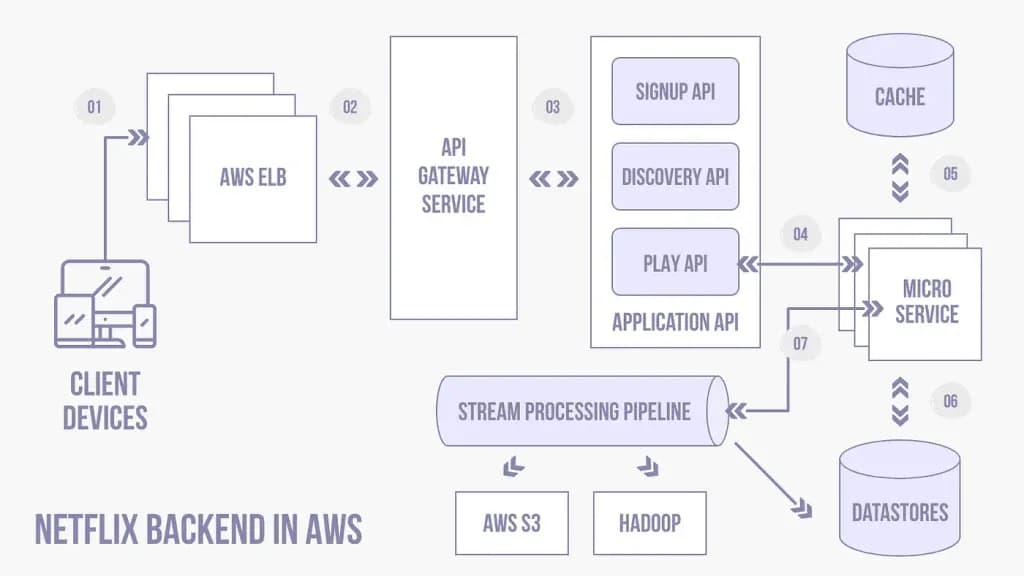
A successful example of a company using microservices is Netflix. As a streaming content service, Netflix has transformed how people enjoy movies and TV shows. Here are some reasons they have been fundamental to Netflix’s success:
- Modularity: Larger software programs are divided into smaller microservices, each with its set of responsibilities, making development, maintenance, and scalability easier.
- Independence of Scalability: By using microservices, Netflix can scale different parts of its application independently as needed, achieved through horizontal scaling and workload partitioning.
- Isolation and Fault Tolerance: If a microservice malfunctions or slows down system requests, engineers can quickly isolate that component without affecting others, ensuring uninterrupted service and greater fault tolerance.
- Monitoring and Tracking: With a microservices-based architecture, detailed tracking and monitoring of each individual software component are possible, essential for ensuring optimal performance and effectively resolving issues.
In summary, Netflix’s architecture stands out for its modularity and scalability independence, enabling a large-scale online content streaming service with uninterrupted performance and rapid innovation in a constantly evolving technological environment.
Conclusion
In conclusion, microservices offer notable benefits such as scalability, agility, and resilience but also pose challenges in terms of management complexity and coupling. Deciding to adopt this architecture requires a thorough assessment of project needs and team capability. It is not a one-size-fits-all solution, and careful consideration of the suitability of microservices based on complexity, scope, and available resources is essential. An informed decision will ensure an effective and successful architectural approach.
To delve deeper into this world and consider them as an option in development, we recommend visiting the following website. It offers a wide range of resources, from architectural patterns and informative articles to guidelines for adoption, refactoring, and testing strategies.