
The rise of Linux: reaching 4% market share by 2024

In the world of personal computers, Microsoft has long since reigned supreme in the Windows operating system market. Its market share exceeds 50% of the total. However, it still has its competitors, Apple with its macOS and open source Linux.
SHORT HISTORY OF OPERATING SYSTEMS
In the early years of computer development, when computers occupied entire rooms, they had no centralised tools for programme execution, monitoring and hardware management. As they evolved, aids, libraries and common solutions were created and reused to perform these actions and operate the devices. Until the first version of proto-OS, known as Kernel, was created.
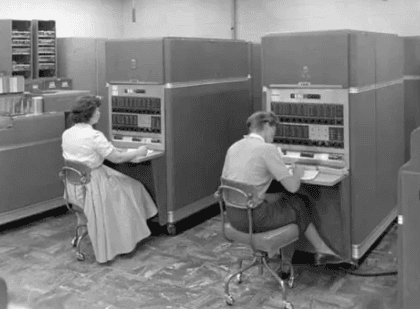
The Kernel evolved into an operating system on the first enterprise mainframes. Each mainframe model had its own particular kernel, with different commands, customisations and options, not to mention its interface, which was nothing like the graphical interface we are used to. Each program had to be compiled on the type of operating system where it would run, as there was no standardisation whatsoever.
IBM’S FIRST OPERATING SYSTEM
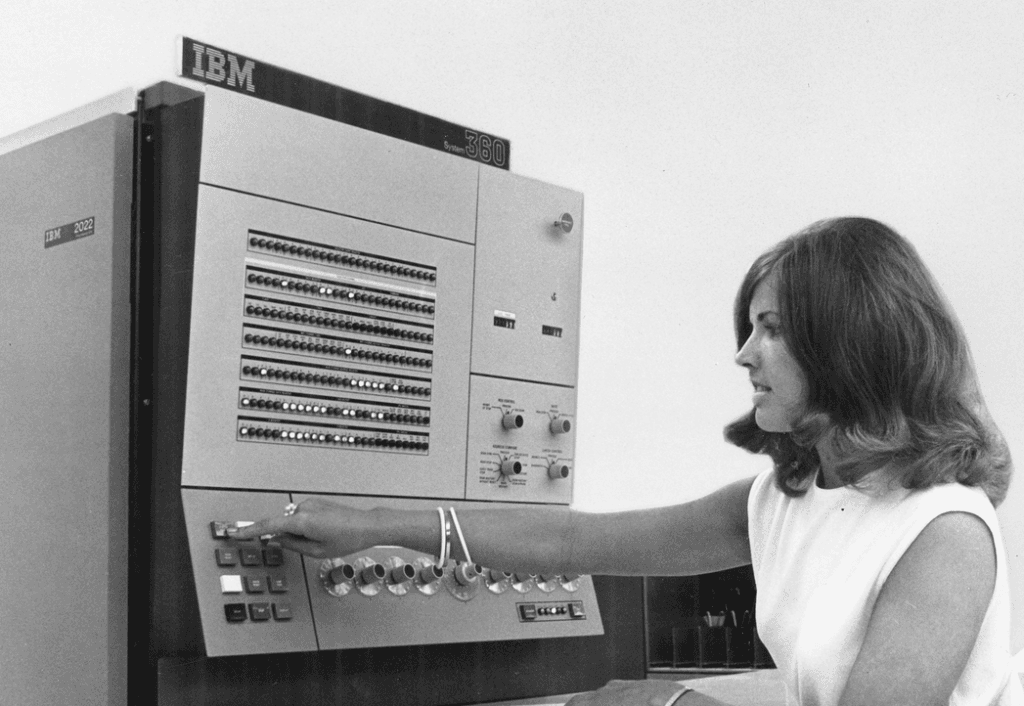
In the 1960s, IBM attempted further standardisation by creating the first operating system that could be used on a range of devices and that always used the same instructions for all devices. The result was a range of operating systems depending on the size of the device, for example, the DOS/360 system for small devices. These ensured uniformity and backward compatibility, to the extent that even today a mainframe computer using IBM’s z/VSE operating system is capable of running 1960 DOS/360 programs. Other manufacturers followed these standardisation steps.
UNIX, A SYSTEM CREATED BY AT&T BELL LABORATORIES
From the late 1960s, the Unix operating system is also worth mentioning. Created by AT&T Bell Laboratories for minicomputers (still much larger than any personal computer), it was based on the C programming language. Initially free and easily modifiable, it was exported to many types of devices until it became a common operating system for workstations and minicomputers.
MICROSOFT MS-DOS
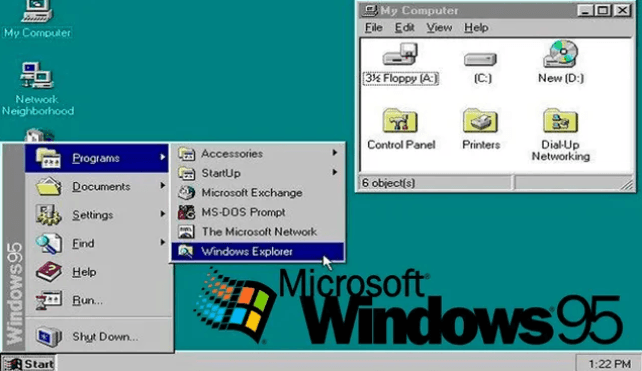
With the advent of the personal computer (or micro-computer), Microsoft’s famous MS-DOS appeared and the increase in processing power began to allow more user-friendly graphical interfaces for less experienced users. Examples of these are Windows (created by Microsoft in 1985) based initially on MS-DOS, and also macOS (created by Apple in 1984) and Linux (created by Linus Torvalds in 1991), the latter two based on Unix.
From the late 1990s until now, these last three operating systems and their subsequent versions have dominated the personal computer market, with Windows leading the way.
WHAT IS THE CURRENT SITUATION?
Here are some important facts about the current state of operating systems:
- Windows has dominated the operating system market for the past 20 years, with a share of over 50%, with its peak in December 2021 where it reached 89.49%. macOS has been a distant second, with its best moment in April 2020 when it reached 19%.
- In February this year, Linux reached its highest percentage according to Statcounter, with a share of 4.03%, surpassing the maximum 3% it had previously reached. Although we are far from higher percentages, the popularity of Linux has been increasing.
- If we count ChromeOS as Linux, then the share rises to 6.34%. But if we focus only on the Linux numbers, we see that the operating system has grown by 31.3% since June 2023. This increase has been gradual. Overall, there is a jump in usage compared to 5 years ago, when February 2019 reported a high of 1.58%.
- Since June, ChromeOS adoption has dropped a little, representing 2.27%. In October, the same system was at 4.01% and has been in decline ever since.
Windows continues to dominate the market, with 72.17%. From June 2022 to June 2023 there was a drop from 76.33% to 68.23%, but usage is now back to 2022 levels.
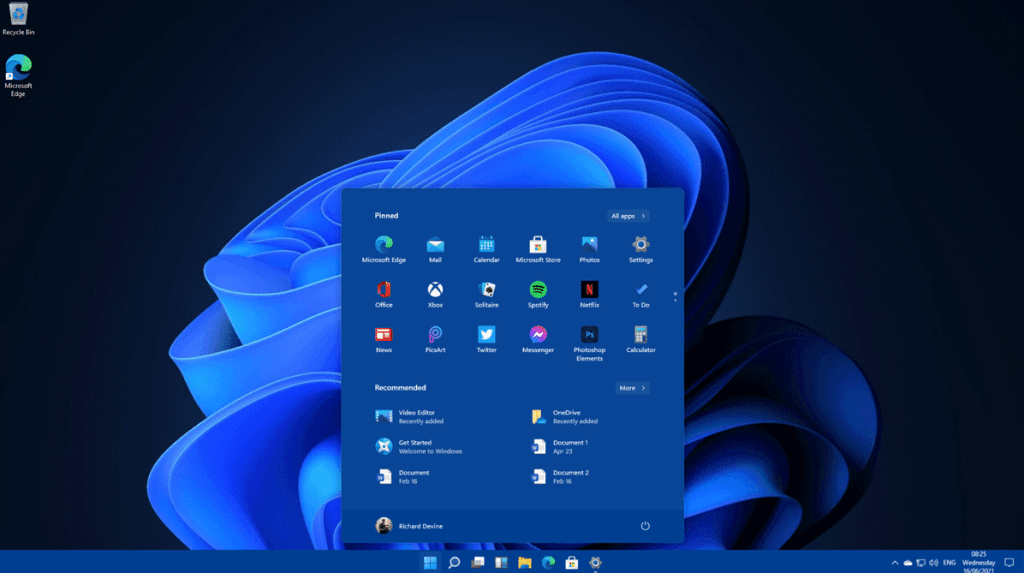
Meanwhile macOS has dropped from 21.32% to 15.42% in February 2024. However, this figure is similar to January 2023 (15.33%) and February 2023 (16.26%). Statcounter’s global graphs indicate that, for some reason, usage dropped between November and December 2023, for no clear reason. These numbers come only from one company’s statistics and may have a margin of error. It is also possible that this drop has to do with the rise of the ‘Unknown’ category in the same period, which may include very new or old versions of operating systems.
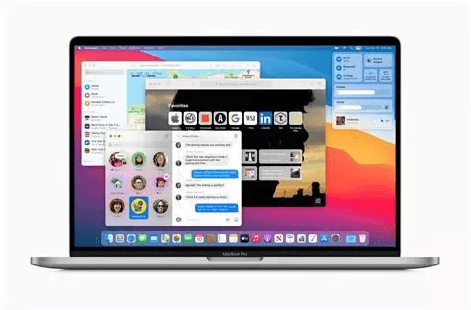
According to IDC, Apple’s market share went from 8.6% in Q2 2023 to 10.6% in Q3 2023, and then to 8.5% in Q4 2023. From 2022 to 2023 its share went from 9.3% to 8.4%.
The latest Statcounter numbers show a small rise in Linux usage in the last few months. In the end Windows and macOS still dominate the market with a combined market share of 87.59 % in February. Despite this growth we are far from being able to indicate that this is the year of Linux, where Linux dominates the market.
ADVANTAGES AND DISADVANTAGES OF LINUX
To understand its level of adoption and potential growth, it may be a good idea to look at what Linux offers and the problems it brings as well.
To begin with, Linux is an open source operating system. This makes it freely available, but at the same time it has no official support team to consult behind it and its development depends on a voluntary collaborative effort. There are companies that offer paid customisations and support, but this eliminates the advantage of being free.
Being open source, Linux has many different customisations and editions. For a long time this has created a great diversity of different distributions, each with its own particularities.
Having this variety has made adoption difficult, as each distribution has its own particularities. In addition, many programs have historically required that they be compiled for the particular distribution, a complex process that is not easy for an inexperienced user. And because it is open source, there are no official support channels, so when you have a problem you are reliant on volunteers who may or may not be able to help you.
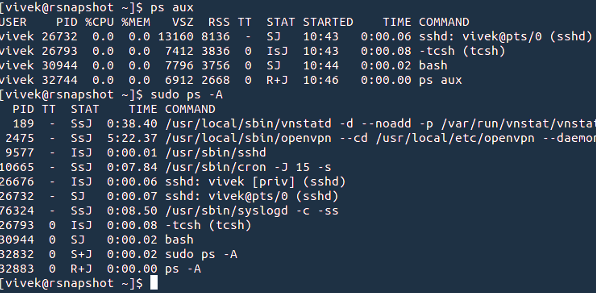
Nor does it help that many of these distributions are based on a command line interface, a type of interface that intimidates non-technical users and is not at all intuitive, since its use is based on knowing the right commands to execute at any given moment.
In recent years there has been a great effort at standardisation, with the creation of the Ubuntu distribution, for example, which does include a graphical interface and is closer to a Windows system, with which the average user feels more comfortable.
It also helped implement a global package-based installation system, which saves users from having to compile programs and makes it easier to add tools to the system.
LINUX, A SECURE AND TECHNICALLY POWERFUL SYSTEM
To give an example, in one of the first distributions I used, installing a video player included compiling the player, and in the compilation it asked for a series of libraries that also had to be downloaded and compiled, which in turn included other components that had to be installed. A task that took 5-10 minutes on Windows could take 1-2 days of work and searching, and could end up failing. In contrast, in modern Ubuntu distributions, installing this same player is accomplished with a single 3-word command. However, there is still a long way to go before a non-technical user can easily install components, as some still require more technical work and configuration.
On the other hand, it should be noted that Linux is a very secure system, and technically very powerful, using technologies, for example, for file system management far superior to those used by Windows. Linux also uses far fewer resources, being able to run well with less CPU and RAM compared to Windows systems, which makes it possible to reduce the price of the PCs needed to use it, and also makes it possible to use older PCs, without needing to be on the latest technology.
These details may explain why in India it has become the second operating system on the market. It also shows how more tech-savvy people tend to prefer it.
CONCLUSIONS
Linux is an operating system with a long history, which has evolved over the years, just like its competitors. It has improved its standardisation and its applications, becoming easier for the average user. Little by little, these improvements are translating into wider deployment.
Its market share is still far from the mainstream systems and it is unlikely that it will ever be in first position, but it is interesting to see its progression and growth.